Which Martial Art Should I Start With? Boxing, Muay Thai, BJJ or MMA?
A simple guide to finding the martial arts program that fits what you’re looking for
You’ve decided you want to try martial arts. Now there’s another question to answer:
Which one?
If you have no previous martial arts experience, the differences between Boxing, Muay Thai, Brazilian Jiu-Jitsu, and MMA might not be obvious. You might know what they look like from watching fights or seeing clips online, but actually training them is a different experience.
At The Combat Clinic in Burlington, we offer training in Boxing, Muay Thai, No-Gi Brazilian Jiu-Jitsu, and Mixed Martial Arts. Each discipline has something different to offer, and you don’t need previous experience to start learning.
Here’s a straightforward breakdown of what you can expect from each.
Boxing: More Than Just Learning How to Punch
Boxing is often one of the easiest martial arts for beginners to recognize.
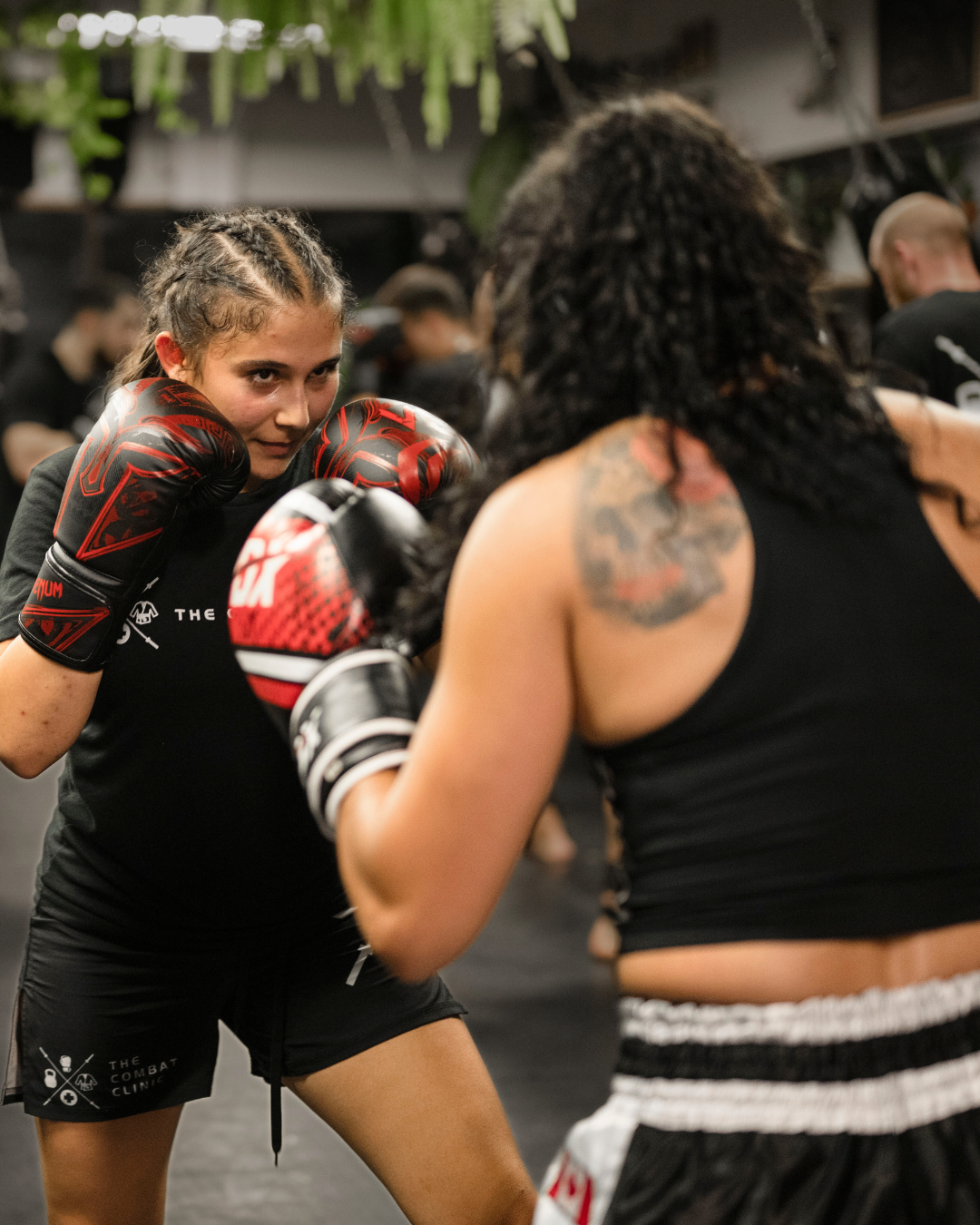
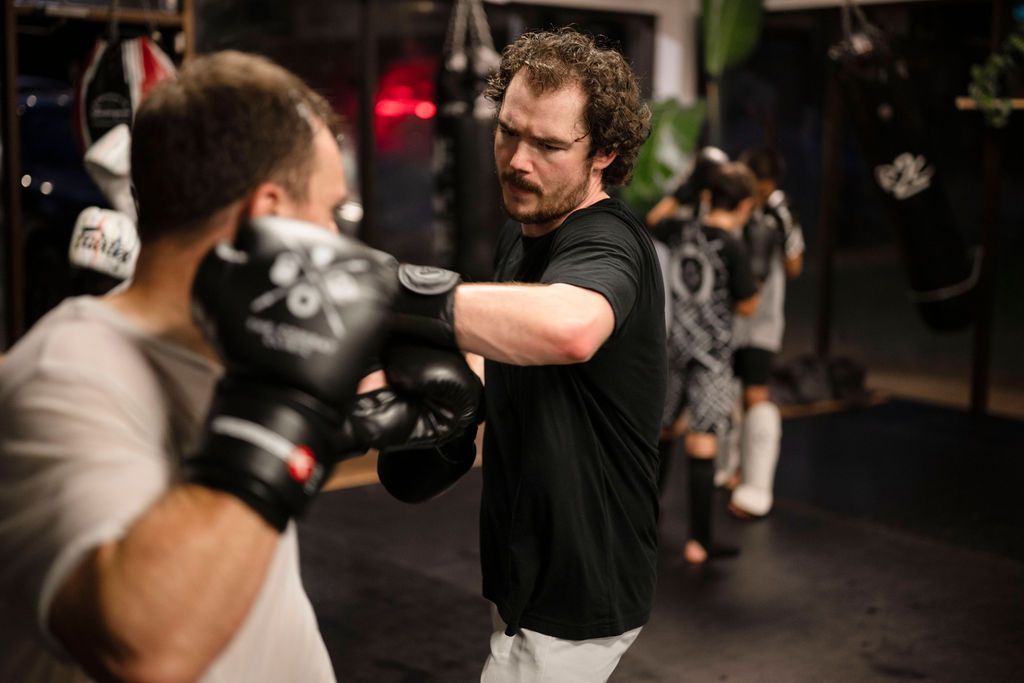
The focus is on punches, footwork, movement, defence, distance, and timing. While the number of techniques may initially seem smaller compared with a martial art that also includes kicks or grappling, there is a huge amount of detail involved in learning how to box properly.
A beginner might start by learning stance, basic punches, how to move forward and backward, and how to defend.
From there, those individual skills start connecting. You learn combinations. You learn how to create angles. You begin understanding when to attack, when to move, and how to maintain good positioning while doing it.
Boxing can be a good place to start if striking is what interests you most and you want to focus heavily on developing your hands and footwork.
You also don't have to be interested in competing to train Boxing. Plenty of people train because they enjoy learning the skill and getting a challenging workout.
Muay Thai: Using Your Whole Body for Striking
If you’re interested in striking but want to learn more than punches, Muay Thai might catch your attention.
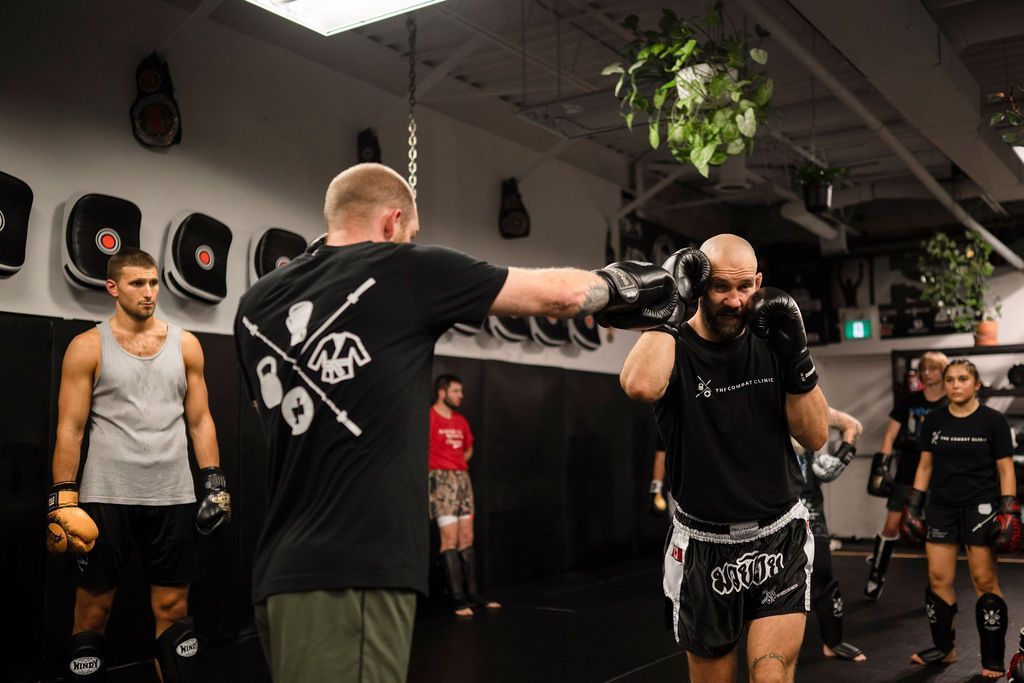
Often called the “art of eight limbs,” Muay Thai uses punches, kicks, knees, and elbows. Training also introduces you to clinch work and teaches you how to combine different striking techniques together.
For a beginner, that might mean learning a basic stance, how to throw a jab and cross, how to kick correctly, and how to defend common attacks.
There is a lot to learn, but you aren't expected to know everything immediately.
One of the things people enjoy about Muay Thai is the variety. A class might include technical drills, pad work, partner drills, conditioning, or combinations involving both punches and kicks.
It can be a good choice for someone who wants a well-rounded striking martial art.
And no, starting Muay Thai does not mean you have to fight or immediately start sparring. You can train, learn technique, and progress without having any intention of competing.
Brazilian Jiu-Jitsu: Learning What Happens on the Ground
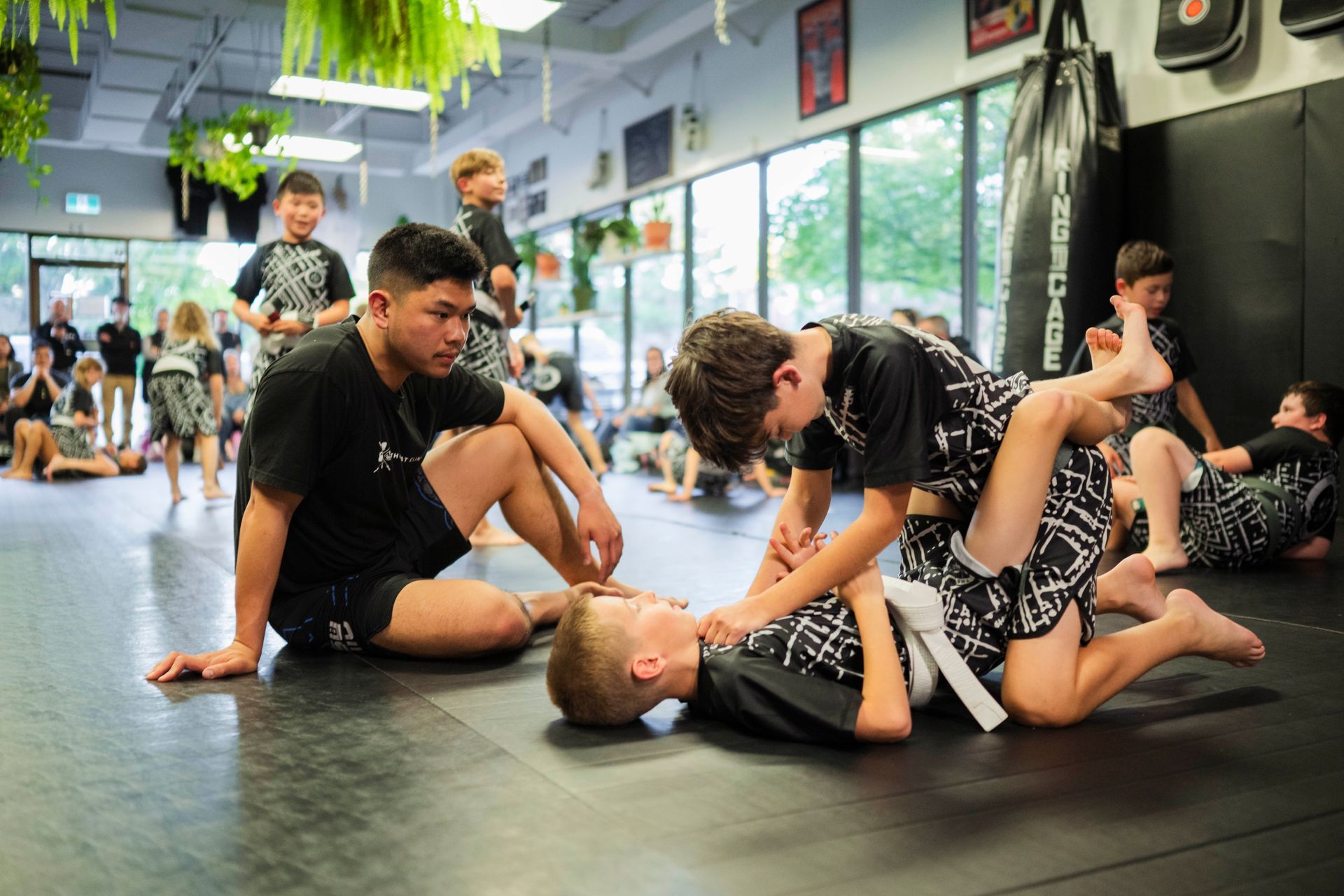
Brazilian Jiu-Jitsu is very different from Boxing and Muay Thai because its main focus is grappling rather than striking.
At The Combat Clinic, we train No-Gi BJJ, meaning students typically train in athletic clothing such as a rashguard and shorts rather than the traditional BJJ gi.
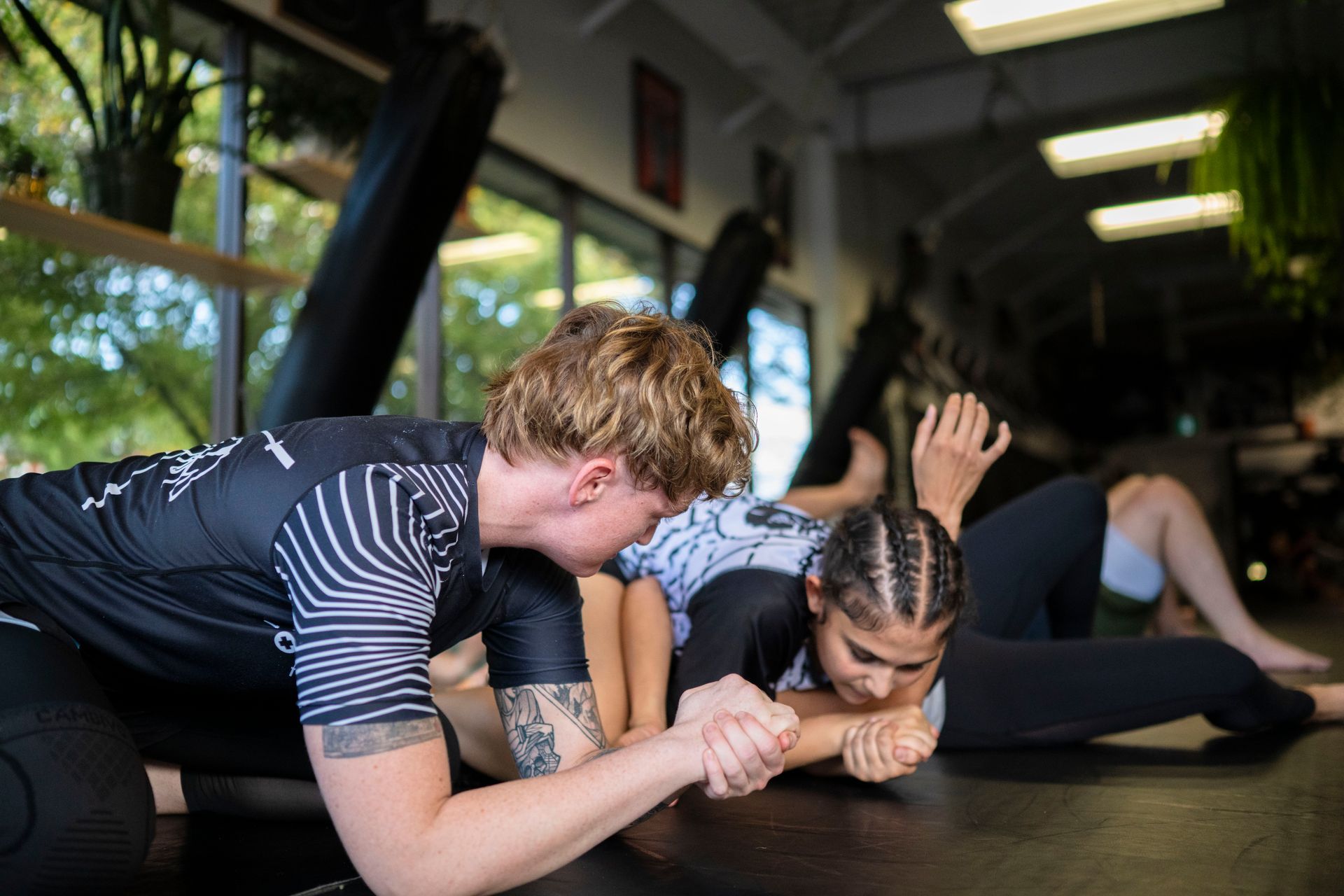
BJJ teaches you how to control positions, escape bad situations, apply submissions, and use leverage against another person.
For beginners, it can initially feel a little like learning a new language. Terms such as guard, mount, side control, underhook, and half guard may all be unfamiliar during your first few classes. Once you spend some time on the mats, however, you start understanding how those positions connect.
One of the interesting parts of BJJ is that technique can allow a smaller person to effectively work with someone larger or stronger. That doesn't mean physical attributes don't matter, but the goal is to learn how to use positioning, leverage, and timing rather than relying entirely on strength.
If the problem-solving side of martial arts interests you, BJJ may be worth trying.
MMA: Putting the Pieces Together
Mixed Martial Arts combines different areas of martial arts rather than focusing exclusively on one.
That can include Boxing, Muay Thai, wrestling, BJJ, and other techniques that work together in an MMA setting.
Because of that, some beginners assume they need to become good at another martial art before they're allowed to try MMA.
That isn't necessarily the case.
You can begin learning MMA as a beginner. You'll work on fundamentals and gradually understand how striking and grappling connect.
Someone who already has experience in Boxing, Muay Thai, or BJJ may recognize certain techniques, but everyone has to learn how those techniques change when different areas of martial arts are combined. MMA might appeal to you if your main goal is to develop a broad understanding of both striking and grappling rather than concentrating entirely on one area.
Do I Need to Pick Just One?
No.
This is something that can get overlooked when people are researching martial arts gyms. You aren't necessarily making a permanent decision when you choose your first class. You might start with Muay Thai and eventually become curious about BJJ. Someone else might start with BJJ and decide they want to learn Boxing. You may discover that you enjoy two completely different disciplines for different reasons. Trying different classes can actually help you figure out what you enjoy. Your first choice simply gives you somewhere to start.
What If I Have No Idea Which One I’ll Like?
Try a class.
Reading about different martial arts is helpful, but it only tells you so much. You may think you'll love striking and then discover that BJJ is your favourite class of the week. You might arrive convinced you want to learn MMA and realize that you're particularly interested in Muay Thai. The atmosphere of the class matters too. The coach, training partners, pace, and style of learning can all affect how much you enjoy a particular martial art. That's why trying a class is often more useful than spending weeks researching which martial art is theoretically the best choice.
So, Where Should You Start?
Think about what interests you. If you want to concentrate on punches, movement, and footwork, try Boxing. If you like the idea of learning a broader range of striking techniques, including kicks and knees, try Muay Thai. If grappling, submissions, and ground-based problem solving sound more interesting, try No-Gi BJJ. If you want to learn how striking and grappling work together, MMA may be the direction you want to explore. There isn't one martial art that every beginner should choose. More importantly, you don't need to make the perfect decision before you begin.
At The Combat Clinic in Burlington, our martial arts programs give beginners an opportunity to learn the fundamentals, train alongside other students, and find the discipline they enjoy. Start with the one that sounds most interesting to you. You can always try something else once you're on the mats.